
Results
Print out your results and your own description of issues for consideration by clicking here.
All your correct answers are in blue. Any wrong answer is in red.

The prior section gave an introduction to standards and their positive effects on world trade. This section will describe more specifically the positive benefits of standards for consumers and what consumers expect from standards.
After completing this section, you should be able to:
Former U.S. President John F. Kennedy delivered an address containing a declaration of four basic consumer rights, in 1962:
The consumer movement, through Consumers International, added four more rights:
 These fundamentals of consumer protection became formally recognized within the United Nations Guidelines on Consumer Protection, first published in 1999.
ISO’s decision to establish COPOLCO in 1978 was motivated partly in response to the worldwide consumer movement. By then, consumers had already begun organizing campaigns to address their concerns with such issues as product safety and environmental protection.
This is usually the "end-user". The long standing definition from 1979, which may still occur in some documents, is “an individual member of the general public, purchasing or using goods, property or services for private purposes.”
In 2011 COPOLCO decided to modify it slightly, to align with the newly-published ISO 26000, Guidance on social responsibility.
Consumer: “an individual member of the general public, purchasing or using property, products or services for private purposes.”
It is important to appreciate the difference between a consumer, as defined above (and to some extent we are all consumers!) and a consumer representative in standards development work.
A member of a consumer stakeholder category is a representative of a consumer organization, which is defined as either:
An independent organization which is:
Or
An organization or agency that is active in consumer affairs. Such an organization or agency may for example, specialize in one particular consumer issue such as standards, law or consumer protection.
Recently, in 2012, ISO’s technical management board, recognizing the importance of clear definitions of stakeholder groups, issued guidance on stakeholder definitions. A consumer representative was defined as a ‘national, regional and international consumer representation body, independent of any organization that would fall into the ‘industry and commerce’ category, or individual experts engaged from a consumer perspective.’ A definition of all stakeholders is shown in the table in Section 1.3 under ‘The ISO system and its partners.
International Standards help support basic consumer rights, such as the right to safety and the right to be informed, which have their origins in former US president John F. Kennedy’s declaration in 1962. More information can be found on the website of the international consumer association, Consumers International.
Standards also help support basic consumer protection (enshrined in the United Nations Guidelines for Consumer Protection) by helping to raise levels of quality, safety, reliability, efficiency and interchangeability.
They can be an effective tools in consumer protection as they can provide a basis for national leglislation and certification schemes. They can also be regarded as best practice for use in promoting business and in litigation for damages.
In general, consumers want:

More specifically, products should meet consumers’ expectations in terms of:
Consumer concerns have developed over time and so have standards to address these concerns.
Newer issues that standards address include, but are not limited to:
This reflects societal trends, which include globalization, and the wider scope of consumers’ concerns.
Standards can provide specific requirements and/or guidance on addressing consumer concerns mentioned above.
Since consumers can influence the standards, especially in relation to the following requirements or guidance, that define how goods and services are produced, standards can therefore help products and services to meet consumers’ expectations in a variety of ways:
Standards can include requirements or guidance on:

ISO standards aim to achieve a desired result, and so are performance-based rather than being too specific about design characteristics. This approach allows more scope for technological advances and innovation.
Below are some examples of how standards common hazards or concerns associated with consumer products and services – and examples of how national or international standards respond to these issues.
 Society is increasingly concerned with the societal impact of companies, and the ISO Committee on consumer policy (ISO/COPOLCO) first identified the need for ISO to work on a Social Responsibility standard, setting up a working group which was the largest and the most broadly based in terms of stakeholder representation of any single group formed to develop an ISO standard.
At the last meeting of the ISO/WG SR, in July 2010, there were 450 participating experts and 210 observers from 99 ISO member countries and 42 liaison organizations involved in the work. Six main stakeholder groups were represented: industry; government; labour; consumers; nongovernmental organizations; service, support, research and others, as well as a geographical and gender-based balance of participants.
The resulting first global Social Responsibility standard, ISO 26000:2010 provides guidance on how businesses and organizations can operate in a socially responsible way. This means acting in an ethical and transparent way that contributes to the health and welfare of society. It helps clarify what social responsibility is, helps businesses and organizations translate principles into effective actions and shares best practices relating to social responsibility, globally. It is aimed at all types of organizations regardless of their activity, size or location. The standard was launched in 2010 following five years of negotiations between many different stakeholders across the world. Representatives from government, NGOs, industry, consumer groups and labour organizations around the world were involved in its development, which means it represents an international consensus. The world now has an International Standard that provides any organization with guidance on how to be more socially responsible and thereby contribute to society’s ongoing sustainable development. Is your organization ready to let ISO 26000 guide its actions to future sustainability?
You will find more information on the ISO 26000 Web site, the March 2011 issue of ISO Focus+ devoted to Social Responsibility, and the brochures Discovering ISO 26000 and ISO 26000 project overview.
 Young children are at risk of swallowing harmful products used around the home. According to the United Kingdom government, poisoning by solids and liquids accounted for 1 in 25 accidents to children under the age of four and represented nearly 28 788 poisonings nationwide in 1999 alone.
ISO is helping to reduce the risk by means of a standard that provides an internationally recognized test method for assessing the child-resistant characteristics of packages before they are put on the market for consumer use. It allows manufacturers to develop child-resistant packages that offer an adequate physical barrier between a child under the age of five and a range of hazardous products, including certain medicinal products, liquid fuels and solvents, strongly acid or alkaline preparations, and some garden products.
While child-resistant packages have proved effective in preventing children from opening or gaining access to hazardous contents, they have also raised concerns over the difficulty of adults in opening the package, particularly among the elderly and the physically disabled.
ISO 8317, Child-resistant packaging – Requirements and testing procedures for reclosable packages also includes a test method for adults between the ages of 50 and 70 – thereby providing not only a measure of the effectiveness of the package in restricting access by children, but also in permitting access to its contents by adults.
 Complaints provide feedback on how a company's products and services are performing in the market place and, as such, are part of a company's quality system. Handling complaints effectively is also recognized as a way of maintaining customer loyalty.
ISO 10002, Customer Satisfaction - Guidelines for complaints handling sets out an effective complaints handling process that would provide a fair result in the marketplace as well as give industry the capacity to recognize and address systematic consumer problems. The standard provides the essential elements for handling complaints within an organization – from initial receipt to the final assessment of complainant satisfaction – including those related to electronic commerce.
ISO 10002 is designed to encourage harmonization of the divergent complaints handling processes practiced in different countries and by different businesses worldwide. Following a common and internationally accepted ISO standard will provide a uniform set of guidelines to ensure consistent treatment of complaints, irrespective of where the transaction takes place.
 Scuba diving is a fun sport that most adults can participate in. However, it is a complex activity and requires careful forethought and planning, from choosing competent instructors to procuring the correct equipment. Consumers expect reliable assessments of quality and qualifications for services provided.
ISO has developed a series of standards under the general title of recreational diving services, covering safety requirements, including first aid, for the training of recreational scuba divers (ISO 24801), for the training of scuba instructors (ISO 24802), and for recreational scuba diving service providers (ISO 24803), who must ensure the quality of the equipment and qualifications of the instructors.
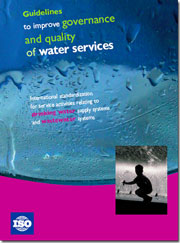 Water and water resources are among the major concerns of today. The demographic, industrial and agricultural expansion taking place throughout the world has induced political authorities to concern themselves with the freshwater resources required for this growth. These resources are shrinking in both quantity and quality, and considerable investments and sound management of resources are needed to meet the needs of the world population, specifically within developing countries.
Through ISO/TC 224, Service activities relating to drinking water supply systems and wastewater systems – Quality criteria of the service and performance indicators ISO has published three standards on activities related to drinking water and wastewater services, specifically on:
 A very successful group of standards for the management of food safety came out starting in 2005, which help ensure safety of food supply chains. The first was ISO 22000:2005, Food safety management systems – Requirements for any organization in the food chain which provides basic guidelines for an organization in the food chain to demonstrate its ability to control food safety hazards in order to ensure that food is safe at the time of human consumption. It is applicable to all organizations, regardless of size, which are involved in any aspect of the food chain and want to implement systems that consistently provide safe products. For practical tips on implementing this standard, ISO published ISO/TS 22004:2005, Food safety management systems – Guidance on the application of ISO 22000:2005.
 Conferences, concerts, sporting events, exhibitions and festivals can offer a wide range of public, local community and economic benefits. However staging an event can also generate negative economic, environmental and social impacts, such as material waste, energy consumption and strains on local communities.
ISO has published a standard to support the organizers of events of all types – sporting, business, cultural, political – in integrating sustainability with their activities. This will help reduce or remove their negative social, economic and environmental impacts, and increase positive impacts through improved planning and processes. It provides companies with a reputational advantage – using a recognized international framework enables leaders in sustainability to demonstrate their actions in a credible and transparent way.
ISO 20121:2012, Event sustainability management systems – Requirements with guidance for use, is suitable for ensuring that events, ranging from local celebrations to "mega events" such as the Olympic Games and Paralympic Games, leave behind a positive legacy. The standard is relevant to all members of the event industry supply chain including organizers, event managers, stand builders, caterers and logistics suppliers.
Among the stakeholders who have provided input to the development of the standard are members of the sustainability team for the London Organising Committee of the Olympic Games and Paralympic Games. The Head of sustainability commented: "London 2012 is proud to have been the catalyst for ISO 20121. This is a piece of legacy with the potential to transform how events around the world consider their economic, environmental and social impacts."
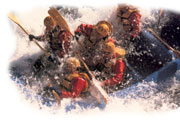 The appeal of adventure holidays and activities is that there is a degree of risk. Standards have been created and are being developed that will help consumers to make an informed choice based on an assessment of the risks and their management. A number of national initiatives have begun in this area. Some notable examples exist in the United Kingdom and Australia. Similar initiatives have begun in Brazil and other countries. Following the success of standards to improve the safety of recreational diving, a suite of International Standards is being developed within ISO/TC 228 for a range of tourism service providers and tourist destinations. These include health tourism and wellness spas, beaches, yachting and golf services, adventure activities, and ecotourism, along with relevant requirements for facilities and equipment.
 In Malaysia, vegetable and fruits need to comply with Malaysian Standards (MS) under Federal Agriculture Marketing Authority (FAMA) Grading, Packaging and Labelling (3P) of Agricultural Produce Regulations 2008 effective 2011.
 Consumers were the key drivers for the development of a national standard in Canada relating to the protection of personal information (CAN/CSA Q830-96). Its success is largely attributed to its development and approval by a balanced committee of interested relevant stakeholders. The standard was subsequently incorporated into Canadian federal law.
 Smoke alarms have been saving lives for decades, but today the technology behind them is making headlines thanks to changes in the modern home environment and recent scientific research. The availability of different technologies could cause consumers to stand in store aisles, overwhelmed by the many smoke alarm choices, wondering which alarm is right for them. So Canada introduced a national standard for Smoke Alarms (CAN/ULC-S531) to make sure customers buy alarms that combine the best technologies available.
 Photoluminescent and self-luminous exit signs and path marking systems are more effective in assisting emergency evacuation, than language based signs saying “exit”. Canadian standard CAN/ULC-S572-10 recognizes the importance of photoluminescent technology, which continues to function even if emergency power fails. It complements Canada’s National Building Code 2010 use of pictograms (e.g., “running man” and directional arrows) in conformance to ISO standards and what is now becoming a universally accepted, language independent symbol for "Exit".
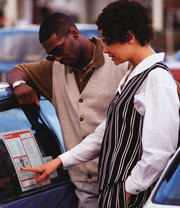 Simple question: Why get involved in standards?
Simple answer: So that the goods and services you buy, or use, will meet your expectations.
How? By helping to write the specifications (standards) that define these goods and services!
A “good” standard means one that creates a good product – a product that you will want to use because it is safe, fit for purpose, and easy to operate among other things.
For this to happen, someone who understands consumers’ views – and who can represent them – has to be there when a standard is being discussed. This is expanded in 3.3
 ISO 26000 gives organizations guidance on implementing social responsibility (SR).
The standard is a huge success for consumer organizations initiating the work in the consumer policy committee of ISO, ISO COPOLCO. ISO 26000 delivers a global agreement on the content and context of SR and also a "common language" to communicate on SR issues. Consumer representatives worked together as a stakeholder group to influence the standard. From a consumer perspective the full inclusion of consumer rights in the definition on SR is a powerful tool for advocating the rights of consumers.
ISO 26000 gives organizations guidance on implementing social responsibility (SR).
The standard is a huge success for consumer organizations initiating the work in the consumer policy committee of ISO, ISO COPOLCO. ISO 26000 delivers a global agreement on the content and context of SR and also a "common language" to communicate on SR issues. Consumer representatives worked together as a stakeholder group to influence the standard. From a consumer perspective the full inclusion of consumer rights in the definition on SR is a powerful tool for advocating the rights of consumers.
 In the United Kingdom, English courses were offered to foreigners, frequently children and young people who were accommodated within local families. The consumer representative was aware of consumer concerns about the accommodation. These concerns included not only information about what was provided, but also the legal parental responsibilities of the host family when accommodating young people. The scope was modified so that the standard addressed this.
 In the United States, consumer representatives made significant contributions to the development of revisions to ASTM F963 on Toy Safety. They provided data and a consumer perspective that helped shape the standards for magnets and yo yo elastic tether toys which presented a risk of strangulation.
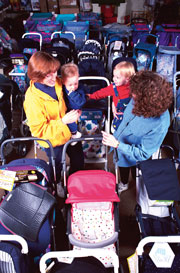 Following an infant death which resulted from a crib injury, a campaign was mounted by a dedicated charity. This led to the development of a series of U.S. standards affecting crib design and subsequently legislation in 7 States. Hazard data showed a reduction in the injuries from about 100 to fewer than 16 per annum, after publication of the standard.
Two consumer organizations in the United States, Consumers Union (CU) and the Consumer Federation of America (CFA), worked on strengthening an ASTM standard reducing the hazards of furniture tip-over. CU also helped complete an ASTM safety standard to require that safety glass be used in glass-top tables.
 In a CEN technical committee developing standards for life jackets and buoyancy aids, a consumer representative suggested that lifejackets with extremely high performance levels, such as those that professionals used in the open sea, were not ideal for recreational use (casual fishermen, canoeists, water-skiers). Therefore, the representative suggested allowing for fashion, ease of use and comfort over strict safety levels. As a result, European Standards were published which later were adopted as ISO 12402-3, ISO 12402-4, and ISO 12402-5. The resulting lifejackets are now widely used.
 In Argentina, some fire extinguishers were unreliable and ineffective. A consumer association there filmed a test showing the extinguishers’ poor performance in putting out fires. The consumer association then worked with the standards body in Argentina (IRAM) to develop strict standards ensuring the extinguishers’ safety and performance.
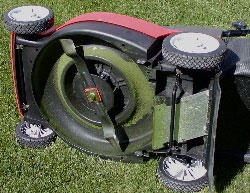 When small lightweight rotary electric lawn-mowers were first introduced, hazard data showed that women sustained serious cuts to their feet more frequently than men. Research showed that women more often pulled the mowers backwards as well as forwards (like a domestic vacuum cleaner), sometimes pulling the mowers onto their feet. The data presented compelling evidence. A less rigid blade, which would not damage feet seriously, was introduced into the European Standard for all such small mowers.
One of the Japanese delegates at a working group under the ISO committee dealing with graphical symbols gave a presentation on the effects and outcomes of the tsunami in March 2011. Poignant images portrayed the full extent of the disaster. However on a positive note, the tsunami warning system that had been developed earlier in this working group as part of ISO 20712-3, Guidance for the use of water safety signs and beach flags, had played a pivotal role in saving lives.
The idea behind the standard on water signs and beach flags originally came from a consumer representative from the United Kingdom who attended a water safety conference and noted that beach flags for safety were different in different parts of the world. Along with a member of the Consumer Policy Unit, this representative wrote a New work Item Proposal which resulted in the publication of the three-part standard.
 One national standard that has had a tremendous compelling impact in Australia and was strongly pushed by consumers after the death of a young girl, was a national standard on solaria. The revision of this standard was very contentious but after publication, legislation was introduced in Victoria, and in 2012 the state of New South Wales was the first to announce banning of solaria salons. It is possible that the other states will follow. This is a substantial safety outcome for consumers.
When an end product or service meets the consumer’s requirements, this creates a win-win situation – both for the consumer …and the producer.
If a consumer likes it, it is likely to sell well! – A quote from a consumer representative