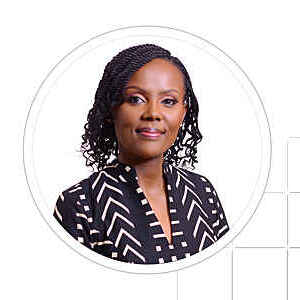
By Catherine Muraga
Managing Director, Microsoft Africa Development Centre,
Engineering Director, Microsoft Corporation
LinkedIn
As we stand at the precipice of what many are calling the Fourth Industrial Revolution, Africa finds itself uniquely positioned to harness the transformative power of artificial intelligence (AI). With the youngest population globally – 60 % under 35 years old – and a median age of just 19, our continent possesses the demographic dynamism to not just adopt AI, but to shape its evolution. The question is no longer if Africa will embrace AI, but how we will lead in its responsible development and deployment.
I look forward to exploring this further at the ISO Annual Meeting in Kigali, Rwanda, where I will be speaking in the session “Futureproof with AI: Growth, responsibility, and the road ahead”. I am happy that ISO is convening leaders, innovators and practitioners to discuss how we can shape an inclusive AI future for millions of learners and communities across Africa.
At Microsoft Africa Development Centre (ADC), we believe that futureproofing with AI requires a three-pronged approach: strategic skilling, responsible policy development and inclusive innovation that addresses Africa’s unique challenges while creating global opportunities.
Skilling: building Africa’s AI talent pipeline
Academia-industry-government collaboration
The foundation of Africa’s AI future begins in our classrooms and research institutions. Through Microsoft ADC’s Faculty Skilling Program, we’ve equipped over 80 faculty members from nine of Kenya’s top universities with cutting-edge AI knowledge since 2021. In 2025 alone, we onboarded 40 new faculty members from institutions including Jomo Kenyatta University of Agriculture and Technology, University of Nairobi and Strathmore University.
This immersive curriculum covers machine learning, computer vision, natural language processing, responsible AI, and data pipeline development using Azure AI tools and open-source frameworks. But it’s more than technical upskilling – it’s about positioning lecturers as catalysts of inclusive AI innovation rather than mere consumers of foreign-developed technology.
Policy: collaborative governance for responsible AI
Public-private partnerships for infrastructure development
The seamless integration of AI in higher education requires urgent infrastructure review. Through collaborations with the Kenya Education Network (KENET), we’ve identified that universities need robust infrastructure for collecting and storing local data to train contextually relevant AI models for use in education and research.
Developing AI governance frameworks
We’re advocating for policies and guidelines governing AI use in educational institutions, emphasizing responsible development that promotes inclusivity. This requires investment in collecting, sorting, storing and processing datasets derived from African settings, ensuring our AI solutions reflect our diversity and address our unique challenges.
At the heart of our mission lies a deep commitment to responsible stewardship of AI technology. We recognize the transformative potential of AI to address some of Africa’s most pressing challenges, from enhancing access to education and healthcare to improving agricultural productivity and driving economic growth. Our vision is to ensure that AI is developed and deployed in ways that benefit all Africans, leaving no one behind and nurturing inclusive progress across the continent.
The future of AI in Africa is not predetermined – it’s ours to shape.
Inclusive innovation
The discourse around AI often centres on job displacement, but at Microsoft ADC, we see a different reality: AI as a collaborator and enhancer of human potential. While some roles will evolve, the greater opportunity lies in working with AI – hence our massive skilling initiatives across the continent.
Whilst we don’t have all the answers to the questions that this new AI era brings with it, our research paper, “AI and the Future of Work in Africa”, developed through a multidisciplinary workshop with the University of Pretoria, NEPAD, Lelapa AI and Oxford University, identifies the skills, policies and design principles that can support dignified work across the continent.
AI as an equalizer: universal responsibility
AI democratizes access to knowledge and opportunity, but this democratization requires active participation. Everybody has a responsibility to participate in skilling and adoption. Microsoft’s commitment to training one million Kenyans, one million Nigerians and one million South Africans by 2026 in AI and cybersecurity reflects this belief in universal access to AI education.
Microsoft AI for Good: solving Africa’s challenges
- Healthcare innovation: diabetes management
Through our African Health Stories project, we’re leveraging generative AI to create interactive visual, oral and text stories guiding people with Type II Diabetes on lifestyle changes. With 12.7 % of South Africans aged 20-79 diagnosed with diabetes in 2019, this personalized approach addresses the limitations of generic health advice. - Environmental conservation: Maasai Mara and beyond
Our AI for Good initiatives extend to environmental protection, including projects in Maasai Mara that use AI for wildlife conservation and ecosystem monitoring. These projects demonstrate how AI can help preserve Africa’s natural heritage while creating sustainable economic opportunities. - Disaster preparedness: flood forecasting
In Rwanda, our Microsoft Research Africa team is enhancing the ClimaX model for improved flood forecasting. By developing short-term flood predictions for timely warnings, we’re helping minimize damage in highly urbanized regions – a critical application as climate change intensifies weather patterns. - Language preservation: Kikuyu mapping
Our Language Model Adaptations project focuses on improving agricultural practices with culturally sensitive AI copilots. By adapting models for speech recognition and translation using Swahili and Kikuyu datasets, we’re helping farmers enhance productivity while preserving linguistic heritage.
The path forward: institutional embedding and mainstreaming AI
Looking ahead, we’re entering a new strategic phase: institutional embedding. Our goal is to move beyond isolated innovation within computer science departments and mainstream AI literacy across all disciplines – from agriculture and business to law, health sciences and the humanities.
This expansion is essential because the problems Africa must solve are interdisciplinary. An agronomist who understands computer vision can spot crop disease early; a legal scholar versed in machine learning can draft frameworks for ethical data use; an educator adept in generative AI can personalize learning for millions of learners.
Conclusion: Africa’s AI destiny
The future of AI in Africa is not predetermined – it’s ours to shape. By 2030, analysts predict AI could expand Africa’s economy by 50 % of current GDP if we capture just 10 % of the global AI market. But this potential will only be realized through collaborative effort across academia, industry, government and civil society.
At Microsoft ADC, our mission remains clear: to empower every person and organization in Africa to achieve more through technology. The foundation is set. Now, let’s work together to ensure Africa doesn’t just participate in the AI revolution but leads it, creating solutions that address our unique challenges while contributing to global innovation.
The time for Africa’s AI leadership is now. Let’s embrace this opportunity with responsibility, inclusivity, and the unwavering belief that our continent’s best technological days lie ahead.